

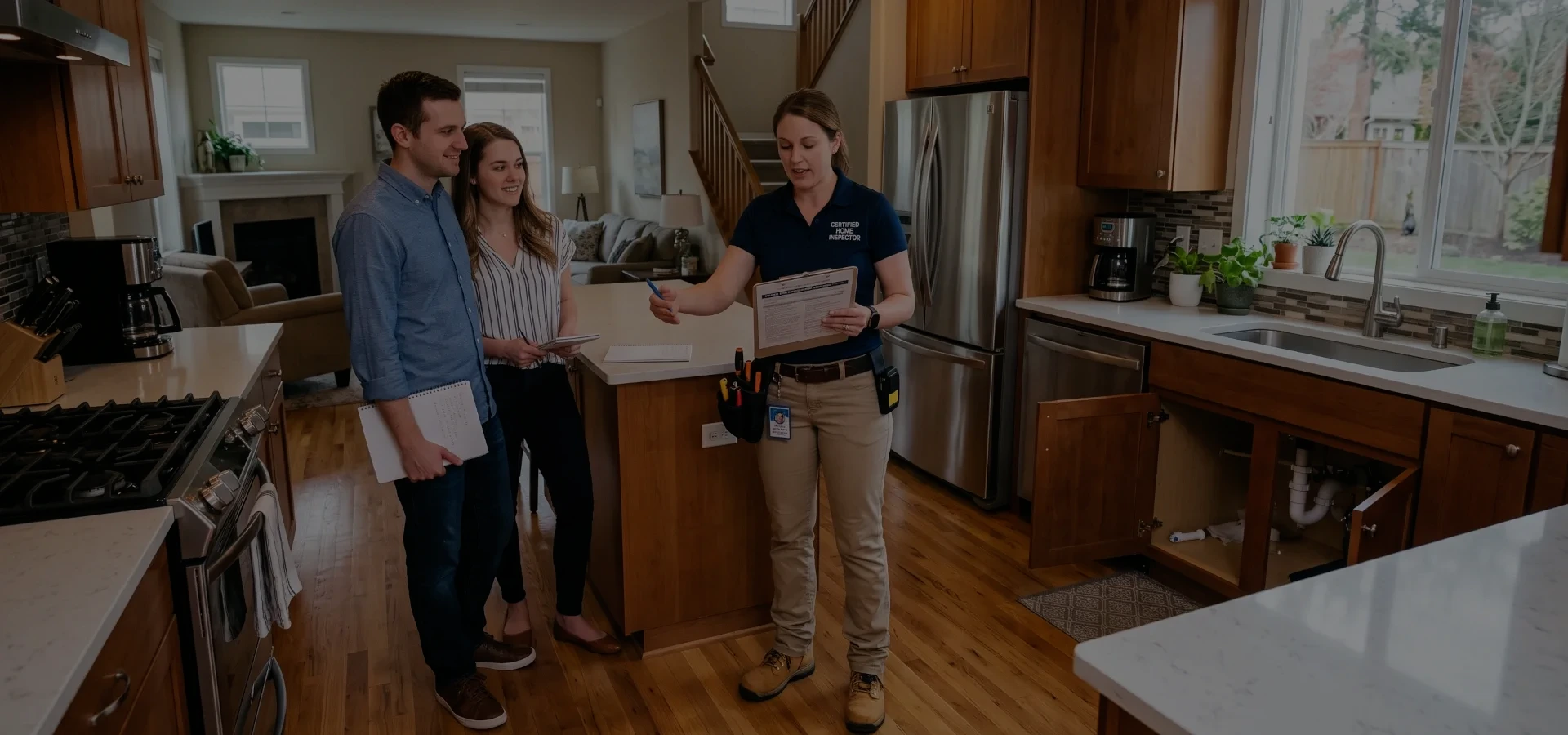
 Move-In. Move-Out. And Everything In Between.
Regular Property Inspections That Catch Problems Early and Protect Your Investment
We document your property's condition at every key stage of a tenancy, so you're protected, informed, and never caught off guard.
 Why Inspections Matter More Than Most Owners Realize
An Inspection Isn't Just a Walkthrough, It's Your Paper Trail.
When a tenancy ends smoothly, nobody thinks twice about inspections. But when there's a dispute over the security deposit, a disagreement about damage, or a question about what condition the property was in when a tenant moved in, the inspection report is the thing that determines the outcome. Without documented move-in and move-out reports with photos, it's your word against your tenant's. With them, the evidence speaks for itself.
Beyond dispute protection, regular inspections during a tenancy let us catch maintenance issues early, before a slow drain becomes a plumbing emergency or a small roof leak becomes ceiling damage. Proactive inspections save you money and protect the long-term condition of your property.
Find out why we’ve got 100+ Google reviews, averaging 4.2 stars.
 Our team personally responds to most inquiries within one business day!

 Inspection Types
Types Of Inspections We Conduct
Move-In Inspection
Before a tenant takes possession, we document the condition of every room with written notes and photos. The tenant reviews and signs the report, acknowledging the property's condition at the start of their tenancy. This becomes the baseline used to assess the property at move-out.
Move-Out Inspection
When a tenant vacates, we compare the property's condition directly to the move-in documentation. We note anything beyond normal wear and tear, photograph it, and use that documentation to support any security deposit deductions. Normal wear and tear cannot be charged to a tenant, damage beyond that can be. Clear documentation makes that determination straightforward.
Periodic Inspections During Tenancy
We conduct scheduled check-ins while a tenant is in place, typically every 6 to 12 months. These catch maintenance issues before they get expensive and verify the property is being cared for in line with the lease. Tenants receive proper advance notice before every inspection, as required by Kentucky law.
Drive-By Exterior Inspections
Periodic exterior check-ins let us monitor curb appeal, look for visible deferred maintenance, and verify the outside of your property meets lease requirements. These can be done between formal interior inspections.
Pre-Listing Inspection
Before your property goes on the market, we conduct a walkthrough to assess its condition and identify anything that should be addressed before a tenant moves in. You receive a clear list with cost estimates so you can decide what to prioritize.
What We Document
What's in Every Inspection Report
- Condition of every room — walls, floors, ceilings, windows, doors, fixtures
- Photo documentation of every area, including anything of note
- Written condition notes with clear descriptions
- Recommended maintenance items and urgency level
- Any lease compliance concerns — unauthorized occupants, pets, damage
- Comparison to previous inspection (for move-out and periodic reports)
All reports are accessible through your owner portal at any time.
Inspection Questions
Common Inspection Questions
-
We conduct periodic inspections during a tenancy to monitor property condition and catch any maintenance issues or lease compliance concerns early. The frequency depends on your management agreement and property needs.
-
Yes. Advance notice is required by law in most states, and we follow all applicable notice requirements before entering an occupied property.
-
We document the condition of every room with written notes and photos before the tenant takes possession. That record becomes the baseline used to assess the property at move-out.
-
Documented move-in and move-out reports with photos give you a clear, timestamped record of property condition at both points. That documentation is what makes a deposit dispute defensible.
-
Yes. All inspection reports, including photos and condition notes, are accessible through your owner portal. You don't have to request them separately.
-
We flag the item, document it in the report, and follow up with the appropriate next step, whether that's scheduling a repair, notifying the tenant, or escalating based on the severity of the issue.
Let Us Help You Navigate the Next Steps for Your Rental